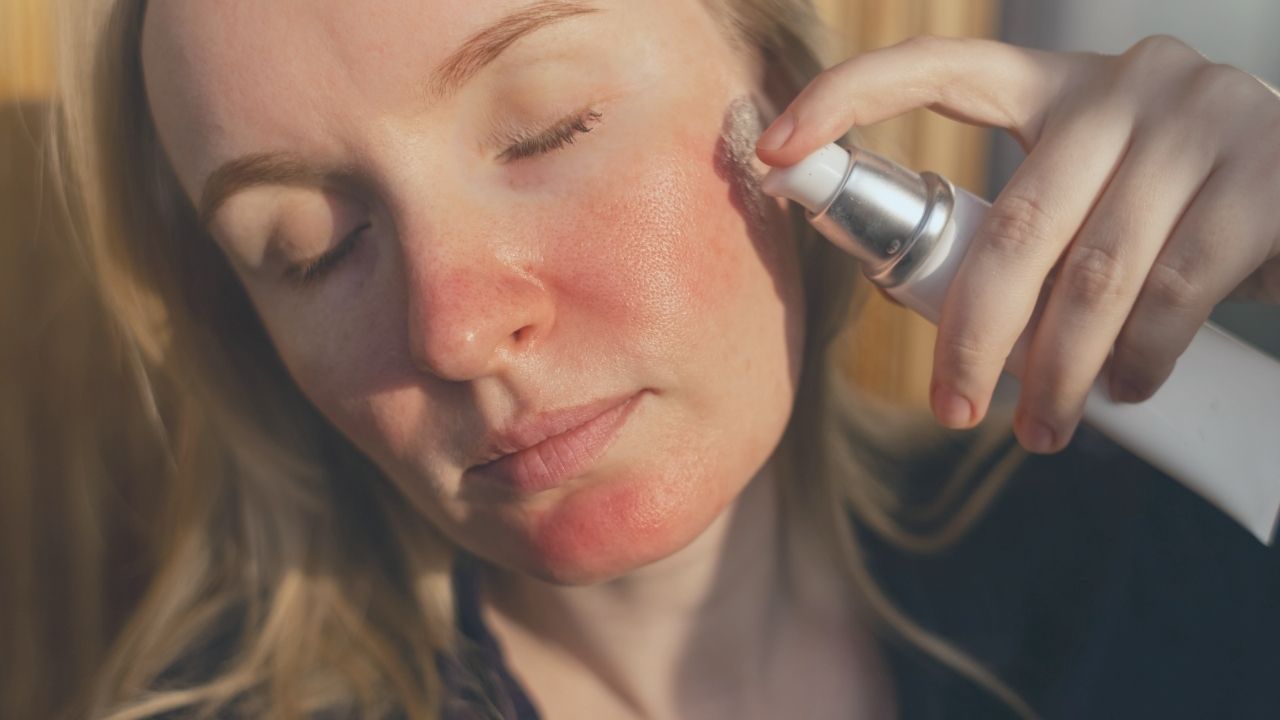
Rosacea Skincare: Why Barrier Repair Nights Can Make a Big Difference
Sep 28, 2026@samanthaschneidermd Sometimes your skin just needs a break! 1–2 nights a week (or anytime I'm flaring), I skip all actives and layer on an occlusive moisturizer to help rebuild and strengthen my skin barrier. My go-to’s: Avène Cicalfate or La Roche-Posay Cicaplast — both are packed with ingredients that soothe and protect stressed skin. This simple switch makes a HUGE difference over time! #SkinBarrier #BarrierRepair #SensitiveSkin #RosaceaFriendly #DermTips ♬ original sound - Samantha Schneider, MD
Living with rosacea often means your skin needs a little extra care beyond your daily moisturizer.
Even if your rosacea is well controlled, your skin barrier can become dry, irritated, or more sensitive from weather, stress, skincare products, or a flare. That's why many dermatologists recommend incorporating barrier repair nights into your skincare routine.
Here's how they can help.
Why the Skin Barrier Matters in Rosacea
Rosacea is a chronic inflammatory skin condition that often leaves the skin more sensitive than usual.
When the skin barrier becomes compromised, you may notice:
- Increased redness
- Dryness
- Burning or stinging
- Tightness
- Flaking
- Greater sensitivity to skincare products
Supporting your skin barrier helps reduce moisture loss and allows your skin to recover.
When Your Skin Needs Extra Hydration
For many people with rosacea, using a heavier barrier repair product once or twice a week can provide additional support—especially during periods of dryness or irritation.
These products are typically thicker and more occlusive than a standard moisturizer, helping to lock in hydration while your skin repairs itself overnight.
Two commonly recommended options include:
- La Roche-Posay Cicaplast Baume B5
- Avène Cicalfate+ Restorative Protective Cream
Both are designed to help soothe irritated skin and support barrier recovery, although they contain different ingredient blends. Many people find that either product works well, and some even alternate between them depending on how their skin feels.
How to Use a Barrier Repair Cream
A simple barrier repair routine might look like this:
- Cleanse with a gentle, non-stripping cleanser.
- Apply your regular moisturizer.
- Finish with a generous layer of a barrier repair cream to help seal in moisture.
Because these creams are thick, they often leave a temporary white cast on the skin. That's completely normal and one reason they're best used as part of your nighttime routine.
Many people apply a thicker layer before bed and allow it to work overnight.
Skip Your Active Ingredients
Barrier repair nights are not the time for potent active ingredients.
If you're using products such as:
- Retinoids (retinol or tretinoin)
- Alpha hydroxy acids (AHAs)
- Beta hydroxy acids (BHAs)
- Other exfoliating treatments
…it may be beneficial to give your skin a break on barrier repair nights.
Allowing your skin time to rest can help reduce irritation and support recovery.
During a Rosacea Flare
If your rosacea is actively flaring—with increased redness, burning, or irritation—it may be helpful to temporarily simplify your routine.
Focus on:
- Gentle cleansing
- Moisturizing
- Barrier repair
- Avoiding irritating active ingredients until your skin has calmed
This "less is more" approach often helps restore comfort while protecting your skin barrier.
Every Rosacea Routine Is Different
Rosacea affects everyone differently.
What works well for one person may not work for another, and factors like climate, skin type, and individual triggers all influence the best skincare routine.
Working with a board-certified dermatologist can help you identify products that support your skin while minimizing irritation.
The Bottom Line
Rosacea isn't just about treating redness—it's also about protecting and strengthening your skin barrier.
Adding a barrier repair night once or twice a week with a rich, occlusive moisturizer can help replenish hydration, reduce irritation, and support healthier skin over time.
And if your skin is flaring, remember that sometimes the most effective skincare routine is also the simplest: gentle cleansing, plenty of moisture, and giving your skin a chance to heal.
Follow Dr. Schneider on TikTok Instagram Facebook
Want the transcript for this video instead?
I have rosacea. And for many of us with rosacea, we often like once or twice a week need to do (0:05) something even more hydrating. Okay, that's something like the Cicoplast Balm or Avene (0:11) Ciclophate.
And they're both going to be really occlusive, thicker, white. They're going to kind (0:17) of go on and leave a little bit of a white hue. Feels so good.
So you want to do that with the (0:25) Ciclophate on this cheek, the Cicoplast on this cheek. And so you want to put these on at night (0:34) and really help support your skin barrier. I have both.
I like them both. I use them kind of (0:42) interchangeably, although they do have different ingredients in them. And I do them once or twice (0:46) a week where literally I put this on.
Usually I put it on even thicker. I'm like pretty white. (0:51) And then I go to sleep with it on and it just helps restore that skin barrier, right? Give us (0:57) that moisture back.
When I use these, I use them on nights that I'm not using my Actives. I wash (1:02) my face with a gentle cleanser. I use my Cente Moisturizer.
Then I put one of these kind of (1:06) right over top to just help seal in that moisture and really help my skin kind of repair overnight. (1:12) That is not a night for Actives, okay? And especially if you're having a flare, your skin's (1:17) getting irritated, you've got to rehydrate, take a break from your Actives. Rosacea is (1:22) such a personal journey.
What do you like for your skin?