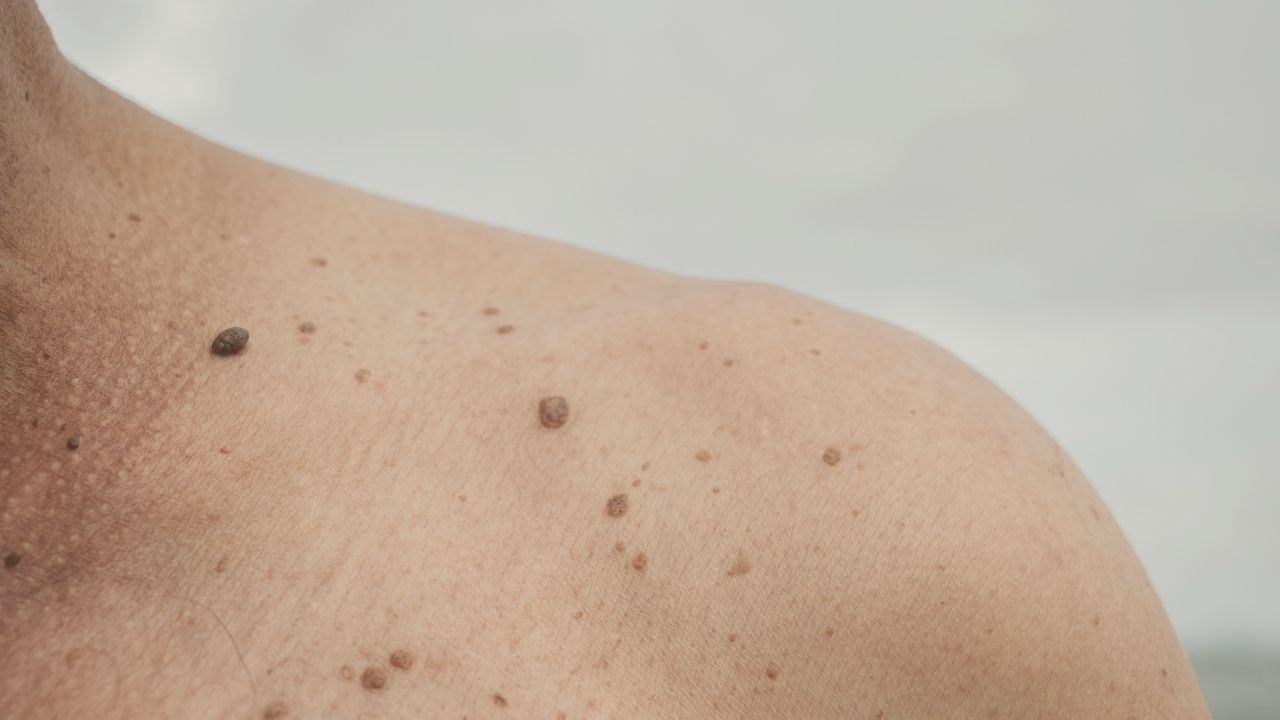
Why Melanoma Commonly Develops on Women's Legs
Sep 14, 2026@samanthaschneidermd The most common location for women to develop melanoma is the lower leg and there are real reasons why that are worth understanding It starts with sun exposure. The lower leg is chronically uncovered in women through skirts, dresses, and shorts across decades of life. Most people apply sunscreen to their face and maybe their shoulders but the legs are almost always an afterthought. That cumulative unprotected sun exposure adds up in a significant way over a lifetime. But sun exposure alone doesn't fully explain it. There is also emerging research around hormonal influences and the unique biology of lower leg skin that may play a role. The two most actionable things you can do right now are simple. Apply sunscreen to your legs every single day. And when you do your self skin checks, use a mirror and intentionally look at the back of your lower legs. And please do not skip your annual full body skin check with a dermatologist. We look at everything including the places you can't easily see yourself. Save this and share it with the women in your life 👇 #dermatologist #skincancerawareness #melanoma ♬ original sound - Samantha Schneider, MD
When most people think about melanoma, they assume it develops on areas that receive the most sun exposure. While sun exposure certainly plays a major role, melanoma also has patterns that differ between men and women.
In fact, the most common location for melanoma in women is the lower legs, while men are more likely to develop melanoma on their back.
Knowing these patterns can help you perform more effective skin self-exams and recognize changes earlier.
Why Does Melanoma Often Appear on Women's Legs?
Researchers believe several factors may contribute to this difference.
1. Differences in Mole Distribution
Women naturally tend to have more moles (nevi) on their legs than men.
Studies have found this pattern across different populations and levels of sun exposure, suggesting that genetics—not just lifestyle—may play a role.
Because melanoma often develops in or near existing moles, having more moles on the legs may partially explain why this area is a common location for melanoma in women.
2. Intermittent Sun Exposure
Another important factor is intermittent, intense UV exposure.
This includes situations such as:
- Beach vacations
- Sunbathing
- Tanning bed use
- Severe sunburns
Many women spend time outdoors with their legs exposed, increasing UV exposure to the lower extremities.
Even seemingly harmless habits—like sitting under an umbrella while your legs remain in direct sunlight—can contribute to cumulative UV damage over time.
3. Hormonal Factors
Researchers are also studying whether hormones, particularly estrogen, may influence where melanoma develops.
While this theory is still being investigated, hormonal differences may help explain some of the variations seen between men and women.
Where Should Men Check?
For men, the back is one of the most common places melanoma develops.
Because it's difficult to see your own back, many melanomas go unnoticed until someone else spots them.
One unexpected warning sign can be blood on a shirt from a mole or skin lesion that has begun to bleed. Any unexplained bleeding or changing spot on the back should be evaluated promptly by a healthcare professional.
Remember: Melanoma Can Develop Anywhere
Although certain body areas are more common, melanoma isn't limited to sun-exposed skin.
It can develop:
- Between the toes
- On the soles of the feet
- Under fingernails or toenails
- On the scalp
- In areas that receive very little sun exposure
That's why a complete monthly skin self-exam is so important.
How to Perform a Skin Self-Exam
Once a month, take a few minutes to examine your skin from head to toe.
Pay close attention to:
- New moles or spots
- Existing moles that are changing
- Lesions that bleed, itch, or don't heal
- Areas that look noticeably different from your other moles
Women should give extra attention to their lower legs, while men should be especially mindful of their back.
If you have difficulty seeing certain areas, use a handheld mirror or ask a trusted partner or family member to help.
Don't Rely on a "Base Tan"
A common myth is that getting a "base tan" before a vacation protects your skin.
It doesn't.
A tan is actually a sign that your skin has already been damaged by ultraviolet (UV) radiation. Whether it comes from the sun or a tanning bed, UV exposure increases your risk of melanoma and other forms of skin cancer.
The safest approach is consistent sun protection—not tanning.
The Bottom Line
Melanoma most commonly develops on the lower legs in women and the back in men, but it can appear anywhere on the body.
Regular skin self-exams, routine visits with a dermatologist if you're at increased risk, and daily sun protection can all help improve the chances of detecting melanoma early, when treatment is often most successful.
Knowing where to look is one of the simplest ways to take an active role in protecting your skin health.
Follow Dr. Schneider on TikTok Instagram Facebook
Want the transcript for this video instead?
Did you know that the most common location for women to develop a melanoma is on the lower legs? (0:06) It's good info to have because it's a good place for you to be doing your skin self-exams to make (0:13) sure that nothing is growing or changing. But what's interesting is why? Why do women tend to (0:20) get melanomas on their lower legs? Sidebar, for men it tends to be on their back is the most (0:25) common location. So if you are anybody, but especially a man, and you take your white shirt (0:31) off, your undershirt, and there's blood on it, somebody needs to evaluate your back.
That is (0:36) one of the most common ways that somebody presents to the office with a melanoma on their back. Okay, (0:43) back to the women. Kind of a couple of reasons why women may be getting them on their lower legs (0:47) more than men.
The first is just genetic differences between men and women. For whatever (0:53) reason, women tend to have more nevi, more moles, on their legs compared to men. And this was across (0:59) populations and across different levels of UV exposure, which makes everybody think that it (1:05) really is intrinsic to differences between men and women.
The second reason is intermittent sun (1:13) exposure. Okay, this is like going on vacation and getting tanned, going to a tanning bed, getting (1:20) sunburned. And a lot of women end up kind of laying out with their legs exposed.
Think about (1:26) like even if you're reading a book, like have you ever like had your upper half under the umbrella, (1:30) but your legs sticking out? Like there's reasons in terms of our behavior that can increase the (1:36) risk of melanoma on the lower extremities. And then the third reason is thought to be hormonal, (1:41) that there may be something related to estrogen receptors, but that's still kind of up in the air. (1:48) So anyways, the whole point of this is to tell you the key areas to be watching.
Now you can (1:55) get melanoma anywhere, including where the sun doesn't shine. So it's good to kind of look at (1:59) your whole body in the mirror once a month, get the lay of the land. But for women, pay particular (2:05) focus on the legs.
Do you have questions about skin cancer or dermatology? Make sure you drop (2:11) them below. And share this with a friend who still thinks getting that base tan before vacation is (2:17) because it's not. It actually increases your risk of skin cancer, including melanoma.
So no more.