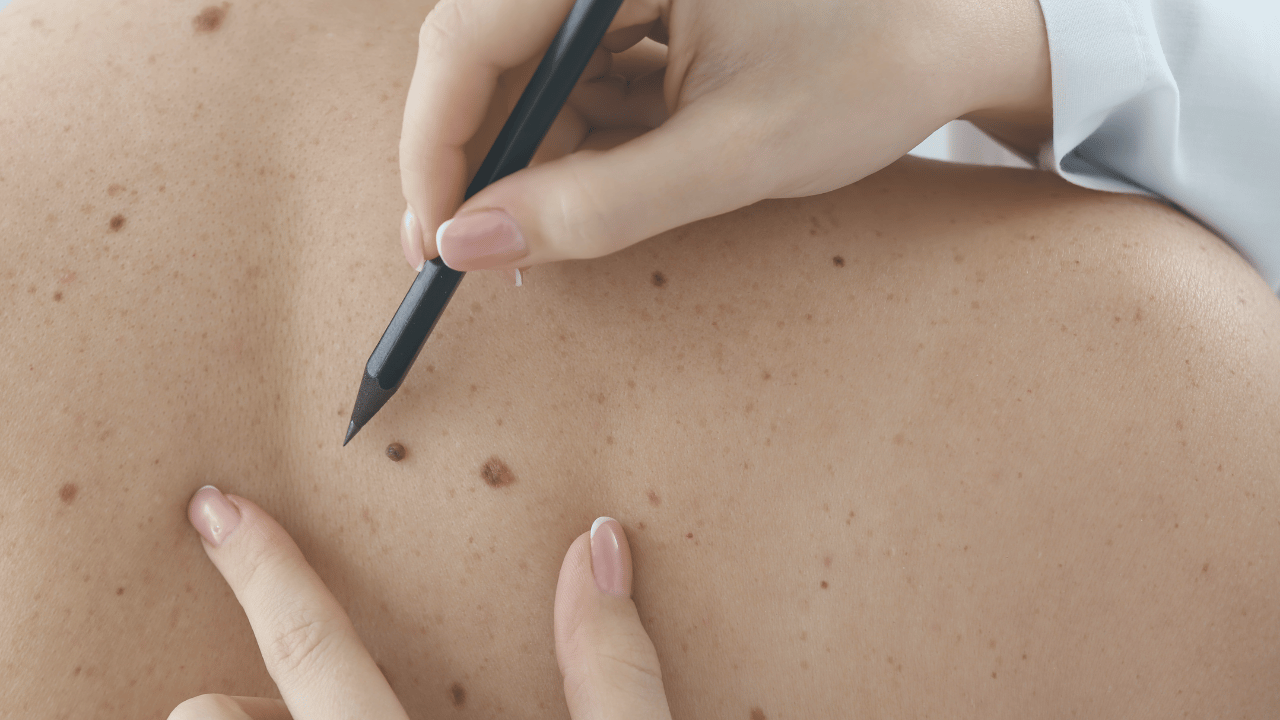
Mohs Surgery Explained: Why Skin Cancer Isn't Removed "Layer by Layer"
Jun 30, 2026@samanthaschneidermd The number one misconception I hear about Mohs surgery is that we remove skin cancer layer by layer. Here's what we're actually doing: When we perform Mohs surgery to remove a skin cancer, we remove a thin disc of tissue that captures a small safety margin around the entire tumor (the edges and the deep margin) all in one carefully mapped piece. That shape allows us to examine nearly 100% of the surgical margin under the microscope. Traditional excision examines about 1% of the margin. The difference in precision is significant. But the real magic of Mohs is that it combines two things no other skin cancer treatment does simultaneously: the surgeon's clinical expertise and real time microscopic analysis. The same physician who examined your skin, removed the tissue, and mapped exactly where it came from is the same physician reading your slides at the microscope. We are literally tracing the tumor out to find exactly where it ends. That combination is what gives Mohs its up to 99% cure rate. And because we only go back for what the microscope tells us we need, we preserve as much healthy tissue as possible. That matters enormously on the face, ears, nose, eyelids, and hands where tissue is precious. If you've been told you need Mohs or you're trying to understand what your procedure involves, save this video and drop your questions below 👇 #dermatologist #mohssurgery #skincancer ♬ original sound - Samantha Schneider, MD
If you've been told you need Mohs surgery, you've probably done some research—and you may have come across the idea that skin cancer is removed "layer by layer."
While that phrase is commonly used, it can create an inaccurate picture of what actually happens during the procedure. In fact, this misunderstanding often causes patients more anxiety than necessary.
As a board-certified Mohs surgeon, one of the most common questions I hear is whether we're literally shaving away thin layers of skin until the cancer is gone. The answer is no.
What Really Happens During Mohs Surgery?
When performing Mohs surgery, the goal is to remove the entire visible skin cancer along with a very small safety margin of surrounding tissue. Depending on the type of skin cancer, its location, and other factors, that margin is often just 1–2 millimeters.
The tissue is removed as a single piece, including the skin cancer, the surrounding margin, and the tissue beneath it. That specimen is then carefully processed in an on-site laboratory while you wait.
Under the microscope, the surgeon examines the entire edge and underside of the tissue to determine whether any cancer cells remain.
Why Is It Called a "Layer"?
The first piece of tissue removed is often referred to as the "first layer" or "first stage." This terminology can be confusing because it doesn't mean a thin slice is being removed from the skin's surface.
Instead, the entire tumor is removed during the first stage whenever possible. The laboratory analysis simply tells us whether any microscopic cancer cells extend beyond the edges of that tissue sample.
If all margins are clear, the procedure is complete.
If cancer cells are still present, the surgeon can pinpoint exactly where they remain and remove only a small additional area of tissue from that specific location.
Precision Is What Makes Mohs Different
Mohs surgery combines surgical expertise with real-time microscopic evaluation. This allows the surgeon to trace the exact path of the skin cancer while preserving as much healthy tissue as possible.
Because only tissue containing cancer is removed, Mohs surgery is considered the most precise treatment available for many common skin cancers.
This tissue-sparing approach is especially valuable in cosmetically sensitive areas such as the face, ears, nose, eyelids, and lips, where preserving healthy skin can improve both healing and cosmetic outcomes.
Why Mohs Surgery Has Such High Success Rates
The ability to examine 100% of the surgical margins is what makes Mohs surgery so effective. By carefully checking the entire perimeter of the removed tissue, surgeons can identify and remove microscopic extensions of the cancer that might otherwise be missed.
As a result, Mohs surgery offers cure rates of over 99% for many newly diagnosed skin cancers.
Have Questions About Mohs Surgery?
Understanding what happens during Mohs surgery can help ease concerns and make the process feel less intimidating. If you've been diagnosed with skin cancer or have questions about treatment options, talk with your dermatologist or Mohs surgeon about what to expect during your procedure.
Follow Dr. Schneider on TikTok Instagram Facebook
Want the transcript for this video instead?
One of the most common misconceptions that I hear about Moe surgery is that the skin cancer is removed layer by layer. I think that that misconception actually leads to a little bit more fear amongst patients than we need. I'm Dr. Schneider, board-certified Moe surgeon. When we see a skin cancer as a Moe surgeon, what we're going to do, like, if this is our skin cancer, okay? So, what we're going to do is take a small safety margin around it, that's the dotted line, and usually that's about one to two millimeters, but it depends on the location, the type of skin cancer that's there. How deep the skin cancer seems to be. There's a lot of different factors. Basically, we're going to cut that little disc out, the whole thing with the skin cancer in the middle, the safety margin around it, and the skin underneath it. Okay, and that skin gets taken into a lab and processed while you wait, so that we can look at it under the microscope to make sure that all of the skin cancer is gone. The most surgeon will look at the entire area around it, everything underneath. If it's gone, then we stop. First piece of skin that's taken into the lab, we call that the first layer. They're actually being very thoughtful to try and remove it in one stage or one layer, if we can, but it doesn't mean like one small piece of paper kind of layer. We're not removing samples of it from you in the moment, we're trying to remove the entire tumor and get clear margins on that first path. This is such a precise way to remove skin cancer, because it is combining the expertise of the surgeon and their ability to clinically examine the lesion and take appropriate margins with the microscope, so that we can see microscopically how much is left and where we need to kind of trace, trace out the tumor. It allows us to remove a skin cancer very precisely, taking as minimal margins as possible, so that the area that's left behind that we have to talk about healing is as small as possible. This process is why Mohs surgery has over a 99% cure rate. Do you have questions about skin cancer and Mohs surgery? Make sure you drop them below.