(775) 451-3376 | 1525 Vista Lane Suite 120 Carson City, NV 89703

Book Now
Patient Portal
Back to Blog

Facial Dandruff? It May Be Seborrheic Dermatitis

seborrheic dermatitis skincare tiktok Jul 28, 2026
@samanthaschneidermd If you have flaky, red patches that keep coming back — this is for you. It's called seborrheic dermatitis. It's a chronic inflammatory skin condition driven by an overgrowth of a yeast that naturally lives on your skin. And I'm seeing it constantly in my office right now. Most people think it's dry skin and pile on heavy moisturizers. Some think it's eczema or rosacea. That's exactly why it never goes away — they're treating the wrong thing. The flaking and redness keeps coming back because the actual cause (the yeast) is never addressed. It doesn't just live on your scalp. It shows up on your eyebrows, the sides of your nose, behind your ears, and even your chest — anywhere your sebaceous glands are active. Triggers include stress, cold dry weather, hormonal changes, heavy skincare products, and certain oils. Sound familiar? The good news: it's very manageable. Antifungal shampoos like ketoconazole or zinc pyrithione are first line for the scalp. On the face, the right prescription antifungal cream makes a big difference. Once you know what it is, you know exactly how to handle it. Save this if you've been dealing with mystery flaking. And drop a comment — where does yours show up? Scalp, face, or both? 👇 #dermatologist #seborrheicdermatitis #dermtok ♬ original sound - Samantha Schneider, MD

Most people think dandruff only affects the scalp. But if you've noticed flaky, itchy skin around your eyebrows, nose, beard, or even behind your ears, you may actually have facial dandruff.

The medical name for this common condition is seborrheic dermatitis, and while it isn't curable, it is very manageable with the right treatment.

What Is Seborrheic Dermatitis?

Seborrheic dermatitis is a chronic inflammatory skin condition that commonly affects areas of the body with more oil-producing (sebaceous) glands.

Although it's often associated with dandruff on the scalp, it can also develop on the face and other oil-rich areas of the body.

Where Does Facial Dandruff Occur?

Seborrheic dermatitis most commonly appears in areas such as:

  • Eyebrows
  • Around the sides of the nose
  • Beard and mustache area
  • Marionette lines (the lines extending from the corners of the mouth)
  • Behind the ears
  • Scalp

While beard involvement is more common in men, women can develop seborrheic dermatitis in these areas as well.

What Causes Facial Dandruff?

Seborrheic dermatitis isn't caused by poor hygiene, and it isn't contagious.

The condition develops from a normal yeast that naturally lives on everyone's skin. In some people, this yeast triggers an inflammatory response, leading to redness, scaling, itching, and flaking.

Because everyone has this yeast, you can't "catch" seborrheic dermatitis from someone else.

What Does It Look Like?

Symptoms can vary, but seborrheic dermatitis often causes:

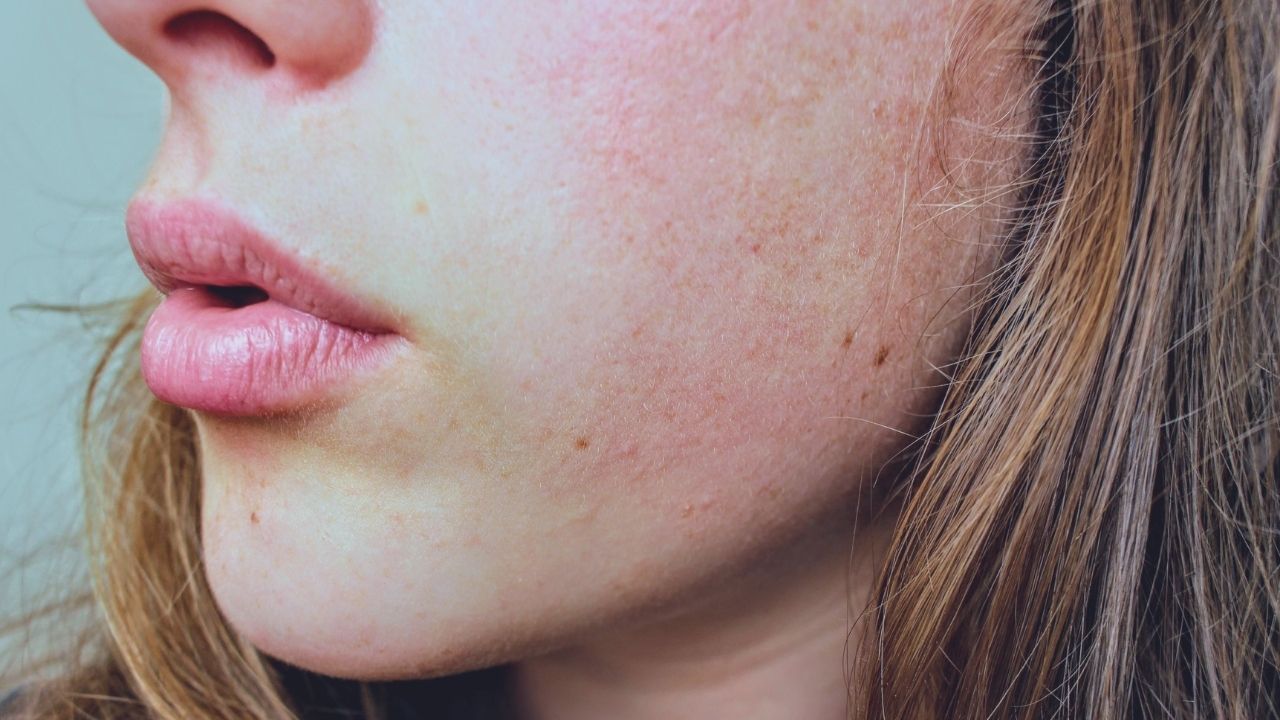
  • Red, flaky patches
  • White or yellowish scales
  • Itching
  • Irritated skin

In people with darker skin tones, the affected areas may appear lighter than the surrounding skin rather than simply red.

Will Moisturizer Help?

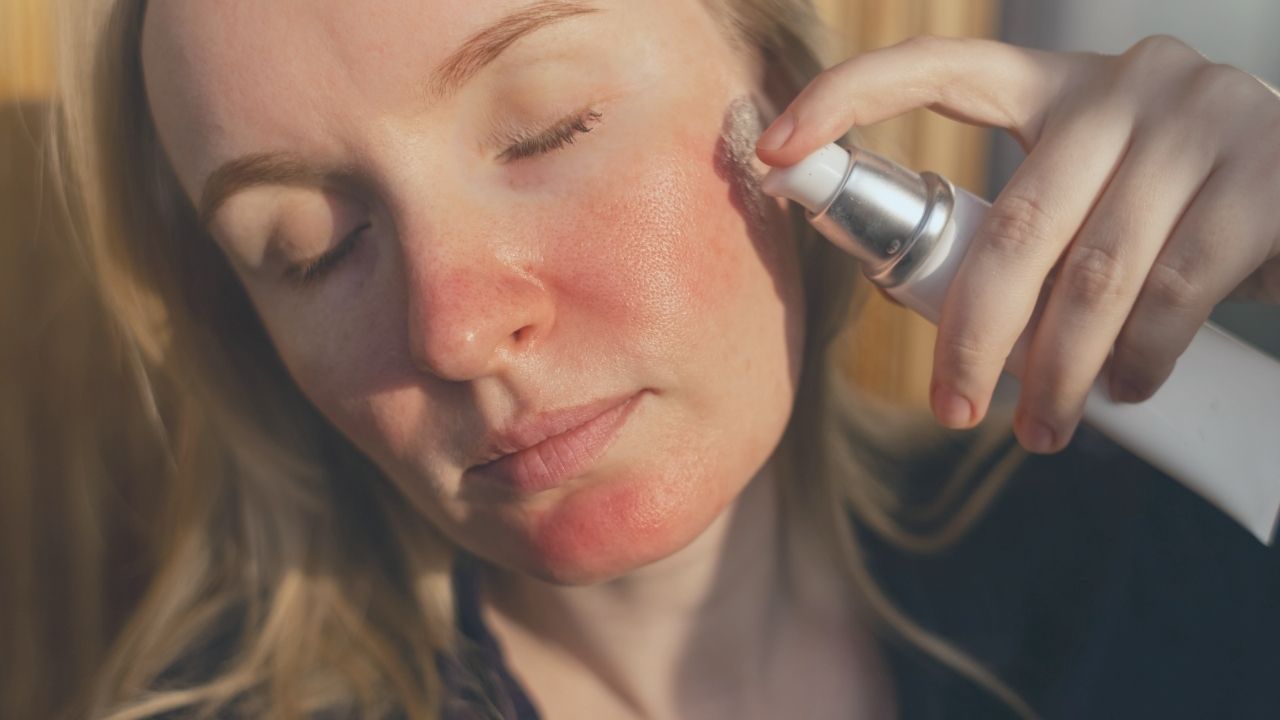
While moisturizer may temporarily reduce dryness, it typically won't treat the underlying inflammation that causes seborrheic dermatitis.

Many people continue applying heavier creams without seeing improvement because the condition usually requires targeted treatment rather than additional moisture alone.

How Is Seborrheic Dermatitis Treated?

Treatment often includes prescription medications recommended by a dermatologist.

In some cases, medicated anti-dandruff shampoos can also be used as a facial cleanser for affected areas, depending on your dermatologist's recommendations.

The best treatment plan depends on the severity and location of your symptoms.

Is There a Cure?

Seborrheic dermatitis is considered a chronic condition, meaning it tends to come and go over time.

The good news is that once you know what you're dealing with and have an effective treatment plan, flare-ups are usually much easier to control. Many people learn to recognize the earliest signs of a flare and begin treatment before symptoms become more severe.

When Should You See a Dermatologist?

If you've been dealing with persistent flaking, redness, or itching around your face that isn't improving with moisturizers or over-the-counter skincare products, it's worth scheduling an evaluation.

A dermatologist can confirm whether seborrheic dermatitis is causing your symptoms and recommend treatments that can help keep your skin comfortable and your flare-ups under control.


Follow Dr. Schneider on                TikTok          Instagram          Facebook


Want the transcript for this video instead?  

One of the more surprising things that I tell patients in my clinic is that they have dandruff (0:05) on their face. Did you know that that's possible? Make sure if this is happening to you that you (0:11) are saving this so that you can come back and watch it again. If you think dandruff is just (0:16) a hair thing, a scalp thing, then this is going to be surprising for you because believe it or not, (0:22) you can get dandruff on your face, common locations, eyebrows, around the nose, sometimes down the (0:30) marionette lines.
If you're a guy, like in the whole beard, though that can happen to women too, (0:35) less common, and behind the ears. The medical term for this condition is seborrheic dermatitis. (0:42) It's like dandruff that can be on the scalp but can also be on the face.
This is a chronic (0:48) inflammatory condition that comes from normal yeast that's on our skin, and in some people it (0:53) just has a really happy environment and just kind of goes ham. I say all of that because it's not (0:58) contagious. We all have this on our skin.
It just shows up as a rash for some people, and it's (1:04) chronic, which means that there isn't really a cure. There are things we can do to manage it. (1:09) There are prescriptions that you can use to help keep it under control, but it will likely continue (1:14) to kind of come and go.
It loves oil-rich areas. That's why it likes the scalp. That's why it likes (1:20) eyebrows, around the nose, even behind the ears.
And on the face, it can look like red, scaly, (1:27) itchy patches. And if you have darker skin, it can even look lighter than your normal skin. (1:33) Putting on moisturizers really doesn't help make it go away.
Usually you need (1:36) prescription medication or sometimes anti-dandruff shampoos as like a face wash. (1:41) It is a chronic condition, so it probably will come back, but once you see a dermatologist and (1:46) you have a plan and you know what to use, then it's very manageable once you see little signs (1:50) of it start to appear. Tell me, where does this show up for you? Scalp? Face? Let me know.

Related Posts

Facial Dandruff? It May Be Seborrheic Dermatitis

Jul 28, 2026

Can Nicotinamide Help Prevent Skin Cancer? What You Should Know

Jul 14, 2026

Your best skin starts here.

Let's Get You Scheduled!
Dr. Schneider is a member of multiple local and national medical organizations.
Pacific Crest Dermatology's contact information
SUBSCRIBE FOR SKINCARE TIPS