My Favorite Face Sunscreens (and Why I Layer Them)
Sep 08, 2026@samanthaschneidermd Someone asked what sunscreens I actually use every day. So here's my real routine, no sponsorships, no gifted products, just what I genuinely reach for as a board-certified dermatologist. First layer is @EltaMD Skin Care UV Recovery with the green tint — green neutralizes redness so this is everything for anyone dealing with rosacea, sensitivity, or post-treatment skin. Second layer is @isdinusa eryfotona ageless. Honestly, this is my foundation. The tint is that good. But beyond aesthetics it contains DNA repair enzymes that work to repair UV damage at the cellular level. That is next level sun protection. And the double application isn't just a preference — there's real science behind it. Most people apply a fraction of the amount needed to actually achieve the SPF on the label. Two layers gets you significantly closer to the real number. Sun protection is the single most impactful thing you can do for your skin and your long term skin cancer risk (and it helps prevent wrinkles and brown spots 💁🏻♀️). Make it something you actually enjoy doing. Now I want to hear from you! What is your favorite sunscreen right now? Drop it in the comments 👇 #dermatologist #sunscreen #skincancerprevention ♬ original sound - Samantha Schneider, MD
If there's one skincare product dermatologists consistently recommend, it's sunscreen.
Daily sun protection is one of the most effective ways to help prevent skin cancer, reduce premature aging, and protect your skin from UV damage. But with so many products available, choosing the right sunscreen can feel overwhelming.
Here's why these two mineral sunscreens are favorites—and why layering sunscreen can make a difference.
Why I Layer Sunscreen
Most people don't apply enough sunscreen to reach the SPF listed on the bottle.
The SPF rating is determined using a generous amount of sunscreen during testing. In everyday life, most of us apply much less than that, which means we may not be getting the full advertised level of protection.
One way to improve coverage is by applying sunscreen in two thin layers. This helps ensure more even application and gets you closer to the amount used during SPF testing.
A Green-Tinted Sunscreen for Redness
One favorite option is EltaMD UV Recovery, a mineral sunscreen available with a green tint.
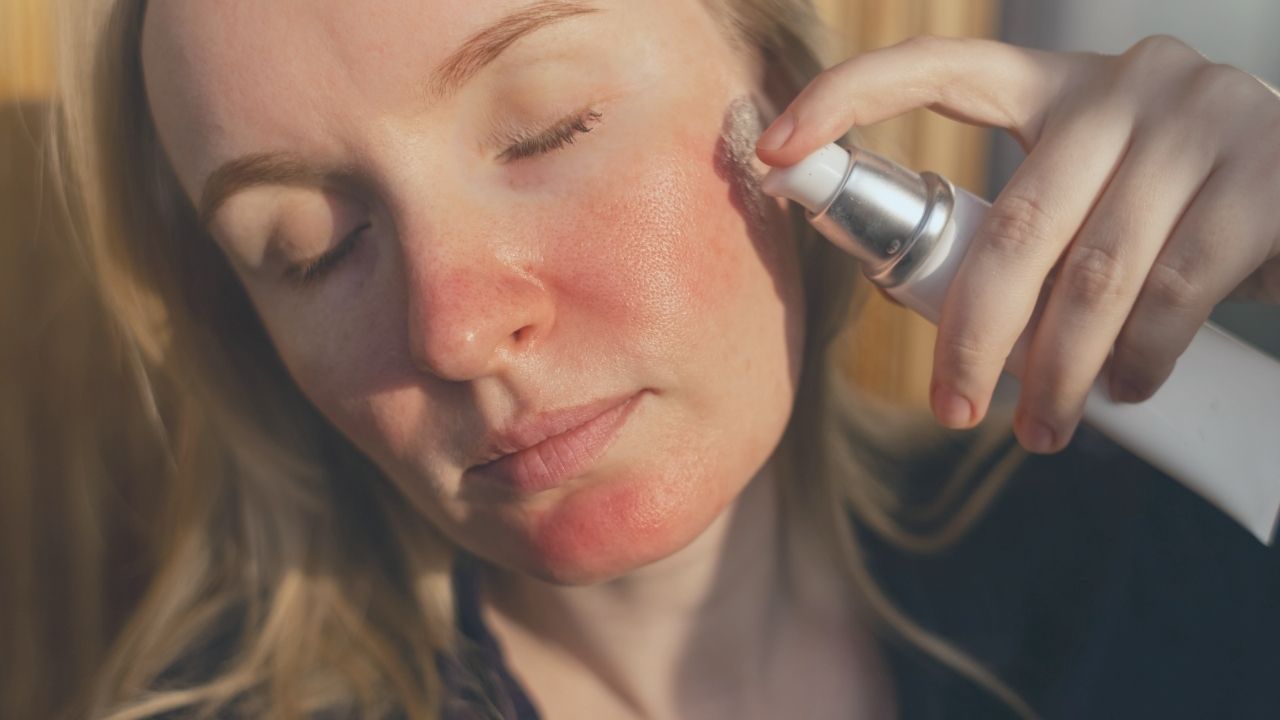
The green tint isn't meant to make your skin look green. Instead, it helps visually neutralize redness because green sits opposite red on the color wheel.
This can be especially helpful for people with:
- Rosacea
- Persistent facial redness
- Sensitive skin
- Redness from irritation or inflammation
Once blended into the skin, the green tint disappears while helping soften the appearance of redness.
A Lightly Tinted Mineral Sunscreen
After the first layer, another favorite is ISDIN Eryfotona Ageless.
This mineral sunscreen has a subtle tint that provides light cosmetic coverage, making it a popular choice for people who prefer a natural, "no-makeup" look.
Many people find the tint helps even out skin tone enough that they don't feel the need to wear foundation every day.
In addition to broad-spectrum sun protection, this sunscreen also contains DNA repair enzymes, ingredients designed to help support the skin's natural response to UV-induced damage.
Mineral vs. Chemical Sunscreen: Which Is Better?
There's a common misconception that mineral sunscreen is automatically better than chemical sunscreen.
In reality, both types can provide excellent sun protection when used correctly.
The most important factor isn't whether your sunscreen is mineral or chemical—it's whether you'll apply it consistently and in the proper amount.
The best sunscreen is the one you'll actually wear every single day.
Tips for Getting the Most from Your Sunscreen
To maximize your sun protection:
- Apply sunscreen every morning, even on cloudy days.
- Use enough product to adequately cover your face and neck.
- Consider applying in two thin layers for more even coverage.
- Reapply every two hours when outdoors, or after swimming or sweating.
- Pair sunscreen with other sun-protective habits like hats, sunglasses, and seeking shade.
The Bottom Line
Finding a sunscreen you genuinely enjoy wearing makes it much easier to protect your skin every day.
Whether you prefer a green-tinted formula to help reduce the appearance of redness, a lightly tinted sunscreen that doubles as complexion coverage, or another favorite entirely, consistency is what matters most.
Daily sunscreen remains one of the simplest—and most effective—steps you can take to protect your skin's health now and in the future.
Follow Dr. Schneider on TikTok Instagram Facebook
Want the transcript for this video instead?
I'm not going to gatekeep, so let's talk about my favorite sunscreen. My all-time favorite (0:06) sunscreen, we're talking about face sunscreen, okay? My all-time favorite is the Elta MD UV (0:12) Recovery with the green tint. Now, this is because I have some natural redness to my skin, and green (0:18) is opposite red on the color wheel, so this helps neutralize it.
I'm not going to put it on my face (0:24) because I already have it on, but it is legitimately green, okay? But you rub it in, (0:31) not green anymore. It helps neutralize redness, kind of camouflage it, mask it. Is it going to (0:38) erase it completely? No, but will it help? Yes, so this I always put on first.
Then I go in with (0:47) my second layer because two layers of sunscreen gives you enough coverage, enough sunscreen on (0:53) your skin to approximate the number on the SPF bottle, okay? The amount that we normally put on (0:59) every day, it's not enough. So then I go in with the Isden. This is the Erythritol Ageless.
(1:05) I absolutely love it. It has DNA repair enzymes in it, so it's going to help (1:11) counteract that oxidative stress from just being out in the world. I'm going to shake it, (1:17) and it has a light tint.
You can already see, light tint, and so I use this as a foundation, (1:24) okay? I'm not putting other foundation on. It gives me a little bit of color. That's what I (1:29) have on my face, so it looks really nice, really natural.
Both of these are mineral only, (1:34) though mineral is not better than chemical, okay? They work similarly. The best one is the one that (1:42) you are actually going to wear, but these are my faves. Tell me your sunscreen faves in the (1:46) comments below.