Can Basal Cell Carcinoma Turn Into Melanoma?
Sep 01, 2026@samanthaschneidermd Can basal cell carcinoma turn into melanoma? It's one of the most common questions I get after a diagnosis — and I want to make sure you have the right answer No, basal cell cannot turn into melanoma. They come from completely different cells in the skin and are entirely separate diseases. If you've been diagnosed with basal cell, you do not need to worry about it transforming into melanoma. But here's what your basal cell diagnosis is telling you — your skin needs more attention going forward. Having one skin cancer puts you at higher risk for future skin cancers, including melanoma, because the underlying risk factors overlap. Sun exposure, skin type, genetics — these affect all of them. Think of a basal cell diagnosis as a sign. It means regular skin checks, daily sunscreen, and knowing what to watch for. Basal cell is the most common and most treatable skin cancer we have — but it is worth taking seriously. Drop your questions below 👇 and share this with someone who's been recently diagnosed and needs to hear this. #dermatologist #basalcellcarcinoma #skincancer #skincancerawareness ♬ original sound - Samantha Schneider, MD
A common question patients ask after being diagnosed with skin cancer is:
"Can my basal cell carcinoma turn into melanoma?"
The reassuring answer is no.
While both are forms of skin cancer, basal cell carcinoma and melanoma develop from completely different types of cells. One does not transform into the other.
Here's what you should know.
Basal Cell Carcinoma and Melanoma Are Different Types of Skin Cancer
Although both cancers develop in the skin, they originate from different cells.
Basal cell carcinoma (BCC) begins in the basal cells, which are located in the deepest layer of the epidermis (the outer layer of the skin).
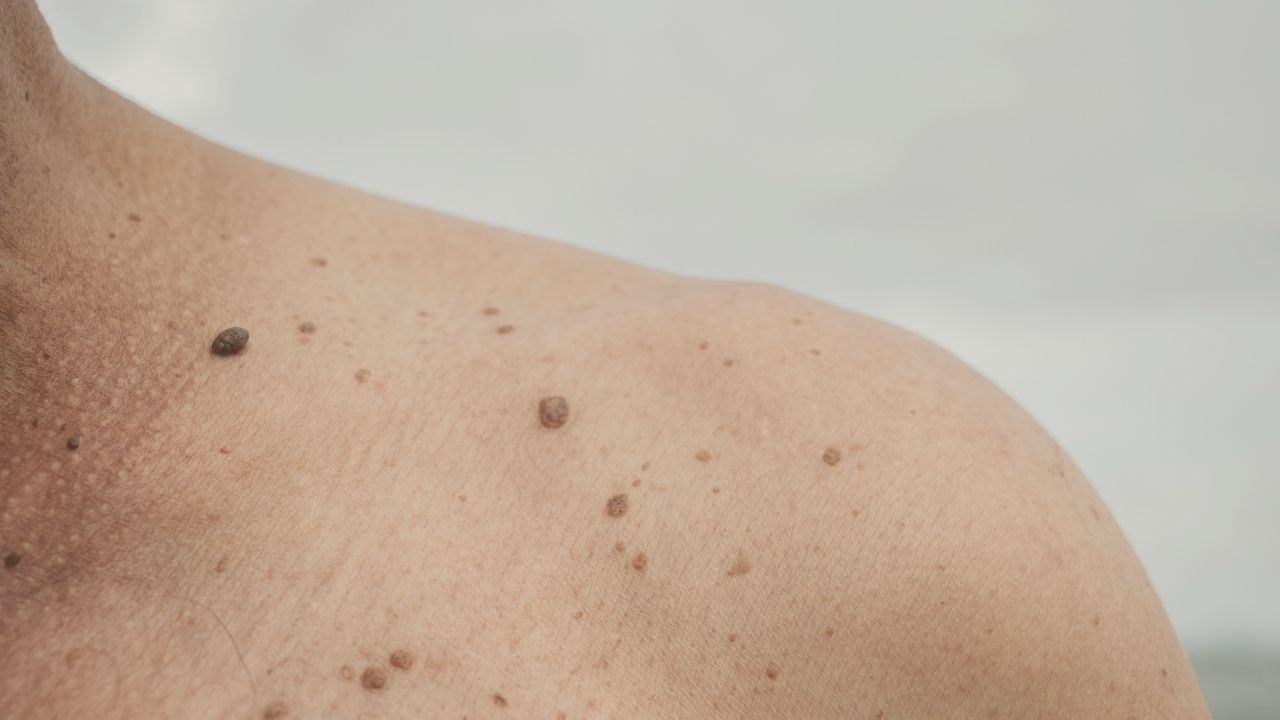
Melanoma, on the other hand, develops from melanocytes—the pigment-producing cells that give your skin its color.
These cells are located near one another within the skin, but they serve different functions and remain distinct cell types.
Because of this, a basal cell carcinoma cannot become melanoma.
Why Are Many Melanomas Dark?
Melanocytes produce melanin, the pigment responsible for skin color.
Since melanoma arises from these pigment-producing cells, many melanomas appear brown, black, or contain multiple colors. However, not every melanoma is darkly pigmented—some can appear pink, red, or skin-colored.
That's one reason why any new, changing, or unusual skin lesion should be evaluated by a healthcare professional.
If Basal Cell Can't Become Melanoma, Does It Still Need Treatment?
Absolutely.
Although basal cell carcinoma rarely spreads to distant parts of the body, it is considered locally destructive.
Without treatment, it will continue to grow where it develops and may eventually:
- Bleed
- Itch
- Ulcerate
- Damage nearby skin and underlying tissue
In uncommon cases, neglected basal cell carcinomas can become much larger and more difficult to treat.
Why Early Treatment Matters
The sooner a basal cell carcinoma is treated, the simpler treatment often is.
Smaller skin cancers are generally easier to remove and may require less extensive surgery than larger, more advanced lesions.
Early diagnosis also helps preserve more healthy surrounding tissue.
What Should You Do After a Basal Cell Diagnosis?
If you've been diagnosed with basal cell carcinoma, it's important to continue working closely with your dermatologist.
Ongoing care often includes:
- Completing the recommended treatment
- Attending routine skin cancer screenings
- Monitoring your skin for new or changing lesions
- Performing regular skin self-exams
Having one skin cancer also increases your risk of developing additional skin cancers in the future, making regular follow-up appointments especially important.
Protect Your Skin Going Forward
A diagnosis of basal cell carcinoma doesn't mean you have to avoid the outdoors, but it is a good reminder to strengthen your sun protection habits.
Dermatologists generally recommend:
- Wearing a broad-spectrum sunscreen with SPF 30 or higher
- Reapplying sunscreen as directed when outdoors
- Wearing sun-protective clothing
- Using wide-brimmed hats and UV-blocking sunglasses
- Seeking shade during peak sunlight hours whenever possible
These habits can help reduce additional UV damage and lower your risk of future skin cancers.
The Bottom Line
Basal cell carcinoma cannot turn into melanoma because the two cancers arise from different types of skin cells.
However, that doesn't mean basal cell carcinoma should be ignored. Left untreated, it can continue growing and damage surrounding tissue over time.
If you've been diagnosed with basal cell carcinoma, follow your dermatologist's treatment recommendations, keep up with routine skin exams, and make sun protection part of your daily routine. Early treatment remains the best approach for protecting your long-term skin health.
Follow Dr. Schneider on TikTok Instagram Facebook
Want the transcript for this video instead?
Can my basal cell turn into a melanoma? And the answer is absolutely not. I'm Dr. Schneider. I'm (0:07) a board-certified dermatologist and I'm a board-certified Mohs surgeon, so I deal with basal (0:12) cell in my clinic a lot.
Basal cells and melanomas cannot turn into each other. Basal cells live in (0:18) the basal layer of the epidermis, which is the very bottom level of the epidermis, before you (0:23) reach the dermis. Melanocytes are also in that similar area, but they don't make up the entire (0:29) thing.
They're kind of like neighbors mixed in. Melanocytes are the cells that make pigment, (0:35) and that is what can turn into a melanoma, and that's why a lot of times melanomas are pigmented, (0:41) though they don't always have to be. So you can't take one cell type, like a basal cell, (0:47) and have it turn into a different cell type, like a melanocyte.
And that's great news, because if (0:52) you've been diagnosed with a basal cell, we just need to treat it. So the next question I get asked (0:58) is like, well, do I really need to treat it? And the answer is yes, because basal cells are locally (1:03) destructive, meaning where they are in the skin, they'll continue to grow. They may start to bleed.
(1:09) They may start to itch. They can eat through the tissue. And so it's important to get rid of them, (1:15) because if you do leave them, and generally it takes a long time for this to happen, but they (1:19) can spread and cause problems.
It is very rare, but I have seen it. The best time to treat it (1:25) is early when it's small, because that means it's less involved to get it out. Now what do you need (1:31) to do that you've been diagnosed with a basal cell? Follow up with your dermatologist.
Make (1:36) sure you're getting your routine skin cancer screenings. Think about upping your sun protection (1:40) game. Doesn't mean you can't go outside, but wearing sunscreen, wearing sun protective clothing, (1:47) hats, sunglasses, seeking shade when you're out there, doing what you can to protect yourself.
(1:53) Make sure that you follow along for no-nonsense skin cancer facts, (1:58) and let me know, do you have questions?